Secession and the Constitution

Was Lincoln Right?

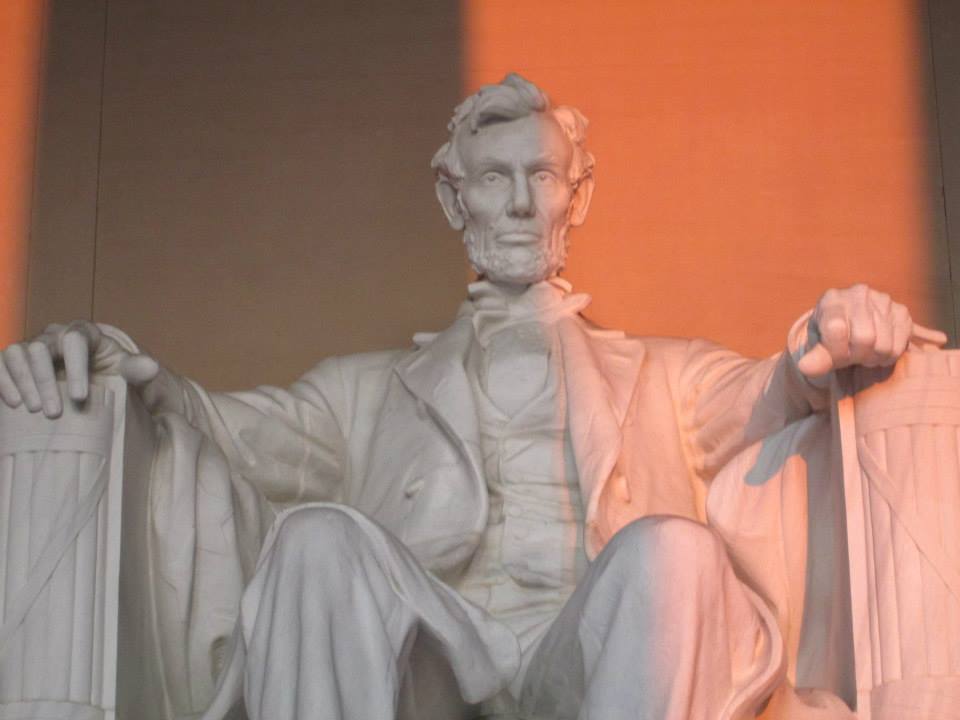
Photo credit: Gary Corbin.

Photo credit: Gary Corbin.

In December of 1860, the state of South Carolina held a special convention to answer a monumental question: should South Carolina secede from the Union, and remove itself from its brethren, becoming a fully independent nation? On December 20 it answered in the affirmative. Within two months, six other states—Mississippi, Florida, Alabama, Georgia, Louisiana, Texas—all voted to follow South Carolina, and claimed to secede. The newly-elected President of the United States, Abraham Lincoln, refused to acknowledge the legality of secession, and said so in his Inaugural Address. In fact, Lincoln was ready to use armed force if necessary to deny these states’ assertion to unilaterally leave the Union.

And so this begs the $620,000 $750,000 question:

Was Abraham Lincoln right?

This constitutional question is at the heart of the matter, the essence of the controversy—the “nub”, as Lincoln himself might have put it. Because if Lincoln was wrong, then these states (and the four that followed after the firing on Ft. Sumter and formed the Confederate States of America) did have a right to leave, and Lincoln began a war that would take the lives of over 620,000 750,000 Americans, and cost the country over a billion dollars in treasure. While it is true that one result of this war was the destruction of American slavery, which by some would have morally justified the war, morals don’t count much in constitutional law. If Southerners were right, then Lincoln violated the rights of the states, and no well-meaning result can justify this sort of “tyranny.” If.

But fortunately for Lincoln, he was not wrong—his reading of the Constitution was actually pretty right-on: the Union was (and is) perpetual.

To fully understand this argument (which neo-Confederates seem to either not understand, or willfully ignore or misrepresent), we have to spend some time with the Founders. What was their intent? And, moreover, how did they express this intent?

The People Ordain the Union

In some ways, we need look no further than the preamble, “We, the People…establish and ordain this Constitution.” [My emphasis] This phrase is usually portrayed as mere rhetorical flourish, but it is not. As Constitutional scholar Akhil Reed Amar has pointed out in his indispensable book, The American Constitution: a Biography, Article VII (the last words of the Constitution) explains what “We the People” is supposed to mean. It states:

The Ratification of the Conventions of nine States, shall be sufficient for the Establishment of this Constitution between the States so ratifying the Same.

First of all, it’s vital to realize that the Founders were completely fed up with their first revolutionary government, the weak Articles of Confederation, established during the war for independence in 1777. Because the states entered the Confederation with their perfect sovereignty intact, the Confederation Congress was by definition a creature of the states. (To show how dysfunctional it was, the states themselves didn’t get around to actually ratifying the Articles until 1781!) This Congress operated more like the United Nations than a national government. While the states were fighting Great Britain, this loose league was perhaps enough (although only barely—there were times during the Revolution when the weakness of the Confederation was a serious liability); but in the five or so years after the fighting ceased, the Confederation Congress proved unequal to the task of managing a continental union. With no power to tax in order to pay off the massive debt incurred by the states and Congress to fight the Revolution, and with no power to compel states to obey the rules they themselves agreed to follow, the Congress was not much more than a paper tiger. The Framers in Philadelphia, then, determined to do much more. They most emphatically did not want another creature of the states—they wanted a truly federal government in which the states’ sovereignty, while still intact, was subordinated to a new vestment of sovereignty.

And so the “bookends” (in Amar’s words) of the Constitution: the first words of the Preamble and last words in Article VII. According to this last Article, “We the People” would assemble in special ratification conventions in the form of elected delegates; would debate the merits of the new Constitution; and then vote, up or down, as to join this Union or not. It was entirely voluntary. Again, these conventions were explicitly not the states themselves—the Founders wanted no creature of the states. And of course, it’s hard to see state legislatures voting in favor of a document that would reduce their power. If New York was a fully independent nation-state (and in 1787 it was), why would its government willingly subordinate itself to some new-fangled theorem written over the summer? If the Founders had left it to the state legislatures, those legislatures would have rejected the document out of hand.

Moreover, these special ratifying conventions themselves represented one of the most democratic events in the history of western civilization up until that time. They were composed of delegates elected by The People of each state (again, not the state itself). In order to ensure the broadest possible participation of voters in order to select delegates, the states liberalized voting rules by getting rid of the property qualifications. This was a special one-time-only thing (at least until the 1830s). And in addition, five states in the North allowed blacks the right to vote.

These elections, then, were as democratic as the 18th century mindset would allow. Each set of delegates debated, and then voted, state by state, thus ensuring that the states would indeed retain a good measure of sovereignty—that this new government would not be a national government, obliterating the states, but rather a federal government, where there would be two sovereign entities: states and the feds. (Madison explains this in Federalist #39.) Article VII then guaranteed that the preamble’s “We the People” was not mere rhetorical flourish. Rather it proved that We the People did indeed ordain the new Constitution.

The last event that guarantees that we know the Founders intended a perpetual Union is an incident that took place at the New York ratifying convention. There, the Anti-Federalists (those who opposed the new Constitution) were winning the argument. In front of full galleries day after day, week after week in the summer of 1788, both pro-Constitution (or Federalists) and anti-Constitution delegates went back and forth, but it became clear that the anti-Federalists had the votes to defeat it. But in the midst of this debate came news that New Hampshire had ratified. That made nine states ratifying, the Magic Number to establish the Constitution and have it go into effect. Then came news of Virginia’s ratification. Still, New Yorkers argued for weeks more.

Finally, the Anti-Federalists offered Alexander Hamilton and the other Federalist delegates an olive branch: the Anti-Feds would agree to vote to ratify if the first congress of the new government would pass certain amendments right away; but if the new congress did not, then New York reserved the right to leave the new union. This compromise must have been attractive to Hamilton, since he desperately wanted New York to join the union. And think about it for a minute: at that moment, it was clear that there would be a new United States of America, with a president, a congress, and all—and New York would not be part of it! It would suddenly be a small independent nation sitting astride yet outside a huge, new independent nation. But despite this temptation, Hamilton turned them down—he had in his pocket a letter from James Madison, the architect of the Constitution, who had been verbally jousting with Patrick Henry in Virginia in that state’s convention. Madison well knew of this attempt at compromise, and he rejected such a notion of future secession, and urged Hamilton to resist just such overtures. In his letter he wrote that “The Constitution requires an adoption in toto, and for ever.” [My emphasis]

Even Patrick “Give me liberty or give me death” Henry, a delegate in the Virginia ratification convention who opposed the Constitution, understood exactly what was afoot. He clearly saw that the new Constitution would require a diminishment of Virginia’s sovereignty. He said in convention:

[W]ho authorised them to speak the language of, We, the People, instead of We, the States? States are the characteristics, and the soul of a confederation. If the States be not the agents of this compact, it must be one great consolidated National Government of the people of all the States…. Have they said, we the States? Have they made a proposal of a compact between States? If they had, this would be a confederation: It is otherwise most clearly a consolidated government. The question turns, Sir, on that poor little thing—the expression, We, the people, instead of the States of America.

Henry knew full well what the Federalists intended, and he didn’t like it; but in the end he also saw he couldn’t stop it.

The Text of a Federal Union

Let’s move to more text of the Constitution. It is true that there is no explicit prohibition on secession; but then again, there is neither an explicit statement allowing secession. Fortunately, the Constitution has much implicit content—it must be implied, otherwise the document would be unintelligible.

Need more proof from the text that the Union is indissoluble? Let’s look at the so-called “supremacy clause” of Article VI, Clause 2. It’s pretty much the clincher:

This Constitution, and the Laws of the United States which shall be made in Pursuance thereof; and all Treaties made, or which shall be made, under the Authority of the United States, shall be the supreme Law of the Land; and the Judges in every State shall be bound thereby, any Thing in the Constitution or Laws of any State to the Contrary notwithstanding. [My emphasis]

But wait, there’s more! Here’s Clause 3 of Article VI:

The Senators and Representatives before mentioned, and the Members of the several State Legislatures, and all executive and judicial Officers, both of the United States and of the several States, shall be bound by Oath or Affirmation, to support this Constitution; but no religious Test shall ever be required as a Qualification to any Office or public Trust under the United States. [My emphasis]

If state sovereignty trumped federal sovereignty, as neo-Confederates argue, then why would state officers have to swear an oath (or affirmation) to support the federal Constitution? The answer is they wouldn’t. But state sovereignty is subordinate to the federal government. And so, these two Article VI clauses pretty much seal the deal.

Does federal supremacy mean no state can unilaterally secede? Of course; but if one is still in doubt, the ultra-democratic mechanism of ratification most certainly proves the intent of the Founders.

Legally Sealing the Deal

If one needs another piece of evidence after the ratification, one can always look to Chief Justice John Marshall. In Gibbons v Ogden in 1824 Marshal wrote:

[R]eference has been made to the political situation of these states, anterior to its formation. It has been said that they were sovereign, were completely independent, and were connected with each other only by a league. This is true. But, when these allied sovereigns converted their league into a government, when they converted their congress of ambassadors, deputed to deliberate on their common concerns, and to recommend measures of general utility, into a legislature, empowered to enact laws on the most interesting subjects, the whole character in which the states appear underwent a change, the extent of which must be determined by a fair consideration of the instrument by which that change was effected.

So, whatever one may believe of the evidence I’ve presented about the Constitution at its founding, the Supreme Court some 30-odd years after the founding ruled beyond doubt that the Union was perpetual and indivisible—that the individual states had surrendered their full independence when they, or rather their people, ordained and established the Constitution.

The growth of slavery and Southern nationalism certainly challenged this notion of perpetual Union, but the Union–and the logic of federalism–was equal to them. We will deal with those challenges later, in another post.


[Source: Akhil Reed Amar, The American Constitution: a Biography. (New York: 2005), 21-39.]

Posted in Secession | Tagged , , , , , , | 78 Comments

The Myth of the Lost Cause

I suppose the first order of business is to establish just what this Lost Cause myth is. We’ll spend quite a number of blog pages explaining why it’s bogus. This overview is necessarily brief, but there are a number of good books on the Lost Cause, starting with Confederates in the Attic, by Tony Horwitz.

This entry in the online Encyclopedia Virginia has an excellent overall description of this phenomenon by historian Caroline E. Janney of Purdue. She includes “Six Tenets” of the Lost Cause, which I find helpful:

The Lost Cause interpretation of the Civil War typically includes the following six assertions:

  • Secession, not slavery, caused the Civil War.
  • African Americans were “faithful slaves,” loyal to their masters and the Confederate cause and unprepared for the responsibilities of freedom.
  • The Confederacy was defeated militarily only because of the Union’s overwhelming advantages in men and resources.
  • Confederate soldiers were heroic and saintly.
  • The most heroic and saintly of all Confederates, perhaps of all Americans, was Robert E. Lee.
  • Southern women were loyal to the Confederate cause and sanctified by the sacrifice of their loved ones.

The historical consensus, however, presents a picture that is far more complicated, one in which some tenets of the Lost Cause are obviously false and some are at least partly true.

We can dispense with the true aspects pretty quickly:

  • Secession was the direct cause of the war, but the South seceded because of slavery.
  • Some slaves were undoubtedly “faithful.” But the thumping great vast majority of slaves loathed bondage and yearned for freedom.
  • One of the major reasons for Union victory was indeed an “overwhelming advantages in men and resources.” But if this was the only reason, the Union would have won the war in 1862, ending the rebellion, and restoring the Union—with slavery intact!
  • Confederate soldiers fought extraordinarily well. But there’s no evidence they fought better or worse, were more brave or more cowardly, than Union troops. And some of them committed documented atrocities against black Union soldiers.
  • Lee was a very great general. But he also made mistakes, and he committed, or allowed to be committed in his presence, a great many crimes.
  • Southern women were probably as loyal as any other women whose men are involved in a great war (although I fully admit I have no data on this one way or the other).

The rest of the Lost Cause is a desperate attempt to control the opinion of posterity, and—what’s more important—to control Southern blacks.

The first Big Idea around the Lost Cause is that the Southern states had every right to leave the Union of their own accord. This is probably the biggest talking point neo-Confederates have, and it is I believe the most misunderstood aspect of the period. Of course, the South did not have the right to secede, and I will deal with this later in a more detailed post. But it is a terribly crucial question; because if they are right, then Lincoln was wrong, and between 620,000 (the age-old, tried-and-true estimate) to 750,000 (a new estimate, based on new ways of looking at the evidence) men perished in an illegal war that is only justified by the destruction of slavery. Some would argue this justification is good enough, and perhaps it is, but I will argue that Lincoln was indeed legally in the right.

The reason for this white-washing (pun intended) of the history of the war was because ex-Confederates basically wanted to extend their control of black people beyond slavery. One must keep in mind that 9,000,000 white people in the South suddenly confronted 4,000,000 freedmen, and were horrified to find the freedmen considered themselves equal to whites. In order to control this large population of black Americans in their midst, then, ex-Confederates first needed to justify their behavior (secession and the war) and distance their “cause” from slavery. To do this, ex-Confederates had to convince the rest of America that the Civil War was a tragic “family feud,” and that Reconstruction was a terrible mistake, a hideous crime against good, upstanding white citizens—that they were completely in the right to “redeem” their governments from “negro rule.” If Southern white elites could control the narrative, then there was an excellent chance they could control blacks.

Complicit in the white-washing were moderate, business-oriented Northern Republicans who represented the forces of Big Capital. Poised on the edge of the period known as the Gilded Age, they saw opportunities in the New South, filled as it was with newly freed labor and ripe for investment, and salivated. The impatient drive to maximize the nation’s economic and industrial power encouraged many in the North to accept this Southern definition of the War, and so to push for reconciliation of North and South. Thus began a partnership between white Americans from the two sections.

Of course, the cost of this partnership of reconciliation was the disenfranchisement of Southern blacks. Northern whites tacitly accepted the newly-constructed Southern narrative of Reconstruction, which portrayed blacks as ignorant at best, violators of white Southern virtue at worst, incompetent always. While the economic development of the South by Northern capital never quite took place, the narrative stuck. It gained power after the turn of the twentieth century thanks to films like Birth of a Nation, and attitudes of those in power (like Woodrow Wilson, and inveterate racist, who appears to have believed that Birth of a Nation was a documentary).“Let’s just forget that silly war” or “Let’s put that tragic misunderstanding behind us” was the message. Southern blacks would have to wait for the 1950s and 1960s for a Second Reconstruction, where they could begin to enjoy the rights won by the Civil War and secured in the Fourteenth and Fifteenth Amendments.

The Confederate South, then, did not get the economic development promised, but they got something else that I suspect they wanted more: their version of the Civil War made something close to mainstream and Jim Crow. While the Lost Cause was never the dominant view of the war, enough of it stuck that, to this day, many Americans—including friends of mine, students of mine, and yes, drinking partners of mine—believe crucial elements of it, distorting the real meaning of the war.

This is the short version of the Lost Cause Myth. Let’s now look at some aspects of it, and tear them apart. In fact, let’s start with the most important legal aspect, secession.

Posted in Civil War, Neo-Confederates | Tagged , , , | Leave a comment

The True Blue Federalist

The True Blue Federalist

I was at my favorite pub a while back, and a conversation began that drifted toward Abraham Lincoln and the American Civil War. “Well you know,” said the guy on my right, “the war wasn’t really about slavery.” I looked at him: he had the knowing leer of a conspiracy theorist. “And,” he continued, “Lincoln had no right to invade the South; the South really did have the right to leave the Union.” He was young-ish, white, seemingly educated. He had no drawl in his speech to suggest he was from somewhere else. He looked a tad smug after his observation. Without even setting down my Guinness, I let out my “inner professor,” and laid waste to his argument, such as it was. (Yes, I can be a prick that way.) In less than a minute and a half his opinion lay in ruins. After I finished, there was silence. (This is why you don’t pontificate at a bar: you kill the conversation.) “So,” said another drinker on the stool to my left, “how ’bout them Blazers?”

I don’t know if it’s because we are in the middle of the sesquicentennial, the 150th anniversary, of secession and the American Civil War, or because of the recent rise of Libertarians who aspire to high political office, but I seem to be running into more and more of these neo-Confederate opinions—bogus arguments about how the Civil War was actually an unjust war that should never have been fought, and the blame for this monumental catastrophe lay at the feet of Abraham Lincoln. It never fails to surprise me. Being a native Californian, I had always assumed that the “Lost Cause” was a relic of the past found only in the South, that no-one of any real awareness could sincerely believe in such a thing. Not at all—that is a stereotype I much regret. My recent experience sitting in pubs having conversations with various people showed a disturbing trend: that close to half of the people I talked with—most of them educated people from places outside the South—believed in some form of the Lost Cause: that the war was over tariffs, that Lincoln started the war, that he was a tyrant, that secession was legal.

This, to me, is a grave problem.

As the writer Shelby Foote put it, the Civil War is to Americans “the crossroads of our being—and it was a helluva crossroads.” But if the nature of this great cataclysm is misunderstood or worse, purposely obscured—if the signposts of this crossroads are moved in the night by vandals—how are we to make sense of where we are today? Our ideas of government power; our notions of citizenship; our struggles with race—all these depend on a realistic interpretation of the Civil War and its aftermath.

The historian and Civil War blogger Kevin Levin believes that the people who support the notion of the “Lost Cause” are a dying breed, that they have lost their relevance. While I hope this is true, it hasn’t been my recent experience. Most worrisome, I see or hear too many instances of this false memory of history in the media, where they can have a much larger effect on public opinion than a hipster on a barstool in a brewpub.

If it was merely a matter of “Americans don’t understand the Civil War” (similar to the hand-wringing “Americans can’t find Asia on a map” or “one in four Americans don’t know the earth goes around the sun,” and other such declarations on the failure of the American education system), I could handle it. It’s not good, but it’s why I’m a teacher. But what’s happening here with the Civil War is much more insidious: it is the purposeful misrepresentation of Secession and the Civil War for modern political purposes.

A few days after Presidents’ Day, Jon Stewart and Larry Wilmore took on one of these misrepresentations on The Daily Show. Andrew Napolitano had appeared earlier in the week on a Fox show stating that Lincoln’s fighting a war to end slavery was wrong. Stewart and Wilmore confronted his statements directly as only The Daily Show can. While the segment necessarily oversimplified the issues around the profitability of slavery, it was still fabulous. A few days later, Stewart had Napolitano on the show for a segment called “The Weakest Lincoln”, and brought in three eminent historians, including Eric Foner, to judge Judge Napolitano’s warped misinformation on Lincoln and the war. Stewart and Wilmore have done this kind of thing more than once, beginning with the hilarious segment on the ordinances of secession (I actually play this one in my class).

There are two nagging problems with this method. First, Stewart and Wilmore (and Eric Foner) can’t be there every time a neo-Confederate or a Libertarian spouts nonsense about Lincoln or the war. Second, fitting these nuanced arguments into a two-and-a-half or three minute segment on a late-night fake news show necessarily means elements are going to be lost—that the public is not going to get the full meaning of why these are bogus arguments. (But I want to be clear that the fact that Jon Stewart even attempts this is awe-inspiring to me. I agree with the late great David Rakoff when he said of Mr. Stewart, “I would drink his bath water.”) Part of the idea for the True Blue Federalist, then, is to provide a kind of “one stop shopping” for arguments against the Lost Cause myth and its Libertarian counterpart, what I will call the “Evil Genius Lincoln” hypothesis.

And so, that’s the point of this blog. Now, there are many excellent Civil War blogs, by actual Civil War scholars, to be sure—Kevin Levin’s Civil War Memory (which is brilliant, especially if you are a teacher); Brooks Simpson’s Crossroads (which is thoughtful, sharp and provocative); Andy Hall’s Dead Confederates (which is fun, sarcastic, and insanely genius for those of us fascinated by the maritime aspects Civil War), just to name three—but these blogs aren’t totally dedicated to “debunking” neo-Confederate BS in the popular media. (Although they sometimes do, and when they do so, they are all excellent.) Those blogs, especially Levin’s and Simpson’s, focus as much on actual scholarship as they do correcting false statements and impressions. (Again, when they choose to, they all do an excellent job debunking statements in the blogosphere from some of the more notable neo-Confederate groups.) The difference between those blogs and this is that “debunking,” especially in the media, will be the main focus.

In addition, I hope to cover a broader territory that deals with federalism over time—which helps to explain the title of this blog. That includes what we in Oregon refer to as the “three sovereigns”: the federal government, state governments, and Indian governments. Because, whatever you may think or feel, Indian sovereignty in real, and it has shaped our constitutional system is surprising (and, I argue, encouraging) ways.

So, away we go. I hope you enjoy.

Posted in Civil War, Neo-Confederates | Tagged , , , , | Leave a comment